Same Pill, Wildly Different Price Tags: How to Stop Overpaying for Finasteride
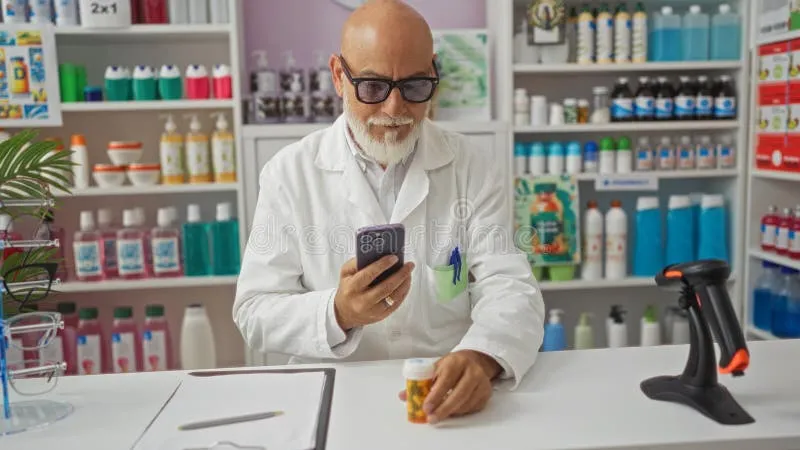
Photo: man comparing prescription drug prices on smartphone at pharmacy, via thumbs.dreamstime.com
If you have ever stood at a pharmacy counter and felt a quiet shock at the number on the receipt, you are not alone. Finasteride — a medication that has been generic since the early 2000s and costs pennies to manufacture — somehow manages to cost dramatically different amounts depending on where you happen to fill your prescription. For a drug that many men take indefinitely, that disparity is not a minor inconvenience. Over years of treatment, it can amount to thousands of dollars.
Understanding why this happens, and what you can do about it, is one of the most practical things you can do for your long-term treatment plan.
Why Does the Same Prescription Cost So Much in Different Places?
The short answer is that pharmaceutical pricing in the United States is not standardized. Unlike many other countries, the US allows pharmacy benefit managers, insurers, wholesalers, and retail chains to negotiate prices independently — and those negotiations happen entirely out of public view.
What this means in practice is that a 30-day supply of 1mg finasteride might cost $8 at one pharmacy and $95 at another, even within the same zip code. The drug itself is identical. The difference comes down to which intermediaries are involved in the transaction, what contracts your pharmacy has with its suppliers, and whether your insurance plan has chosen to cover the medication at all.
Adding another layer of complexity: finasteride prescribed for hair loss (1mg, marketed historically as Propecia) is often treated differently by insurance plans than finasteride prescribed for benign prostatic hyperplasia (5mg, marketed as Proscar). Many insurers categorize the 1mg dose as a cosmetic treatment and explicitly exclude it from coverage, even though the active ingredient is chemically identical to the higher-dose version they may cover without issue.
The Insurance Coverage Problem
For most American men using finasteride for androgenetic alopecia, insurance coverage is either nonexistent or unreliable. Most commercial health plans classify hair loss treatment as elective, meaning the full cost falls to you.
That said, there are avenues worth exploring before you resign yourself to paying full retail price.
First, ask your prescribing physician whether they can write the prescription for 5mg finasteride with instructions to cut the tablet into quarters or halves. This is a commonly used approach — 5mg finasteride is more frequently covered by insurance because it treats a medical condition (enlarged prostate) rather than a cosmetic one. While you should never alter a prescription without explicit physician guidance, many doctors are familiar with this practice and willing to discuss it with patients who have no prostate concerns.
Second, if your insurer denies coverage, request a formal denial letter and ask your doctor to submit a prior authorization or medical necessity appeal. Hair loss associated with documented hormonal conditions or significant psychological distress has, in some cases, been successfully appealed. It is not a guaranteed outcome, but it costs nothing to try.
The Generic Marketplace: Where the Real Savings Live
Because finasteride has been off-patent for decades, multiple generic manufacturers produce it. The price competition between those manufacturers — when you can actually access it — is where patients stand to benefit most.
Pharmacy discount programs like GoodRx, RxSaver, and NeedyMeds aggregate pricing across retail pharmacies and apply negotiated discount rates that are often lower than what insured patients pay through their own coverage. It sounds counterintuitive, but paying cash with a GoodRx coupon at a major chain pharmacy frequently beats using insurance for finasteride specifically.
Before filling any prescription, spend five minutes comparing prices on GoodRx for your zip code. The variation between pharmacies — Costco, Walmart, Kroger, CVS, Walgreens, and independent pharmacies — can be substantial even within a single neighborhood.
Telehealth and Online Pharmacy Platforms
Over the past several years, a number of telehealth platforms have entered the men's health space and made finasteride dramatically more accessible. Services that bundle a digital physician consultation with a prescription and mail-order delivery often price finasteride at $15 to $30 per month, inclusive of the medical visit.
For men without a primary care physician, or those who find in-office dermatology visits expensive and time-consuming, these platforms represent a genuine value proposition. That said, it is worth verifying that any telehealth provider you use is licensed in your state, employs real physicians (not just nurse practitioners operating outside their scope), and dispenses medication through a licensed US pharmacy.
The convenience is real. So is the need for basic due diligence.
Pill-Splitting: A Practical Cost-Reduction Strategy
As mentioned above, 5mg finasteride tablets are chemically identical to 1mg tablets — they simply contain more of the same compound. If your physician is comfortable prescribing the higher dose with instructions to split, a pill cutter (available for a few dollars at any pharmacy) can reduce your per-dose cost by 60 to 75 percent compared to purchasing 1mg tablets directly.
This approach is not appropriate for every patient or every situation. Discuss it explicitly with your prescribing physician before making any changes to your prescription.
Building a Sustainable Long-Term Cost Strategy
Finasteride is a long-term commitment. Most physicians recommend continued use indefinitely to maintain results, which means the monthly cost compounds significantly over time. A difference of $50 per month between your current pharmacy and a more affordable option represents $600 per year — and over five years of treatment, $3,000.
The practical steps worth taking today:
- Compare prices using GoodRx or a similar aggregator before filling your next prescription
- Ask your physician about the 5mg splitting option if cost is a barrier
- Evaluate telehealth platforms as an alternative to traditional prescription channels
- Check your insurance formulary annually — coverage decisions change at plan renewal
- Ask independent pharmacies directly what they charge — they sometimes beat chain pharmacy prices significantly
Finasteride is not an expensive drug to make. The cost you pay should reflect that reality. With a modest amount of research, most men can reduce what they spend without changing their treatment in any meaningful way.